

Secondary Infertility Treatment Ondo
Having conceived before can make it confusing—and often frustrating—when another pregnancy doesn’t happen as expected. You may find yourself wondering, “If we got pregnant before, why is it difficult now?”
This is known as secondary infertility, and it can affect both women and men. If you’re looking for secondary infertility treatment Ondo, the first step isn’t automatically IVF. A proper fertility evaluation can help identify what may have changed since the previous pregnancy and determine which treatment option makes sense for you.
What Is Secondary Infertility?
Secondary infertility means difficulty achieving another pregnancy after having achieved at least one pregnancy in the past. The World Health Organization (WHO) defines infertility as failure to achieve pregnancy after 12 months or more of regular, unprotected sexual intercourse. Secondary infertility specifically refers to infertility occurring after at least one previous pregnancy.
Having conceived successfully in the past doesn’t guarantee that fertility will remain exactly the same. Age, reproductive health conditions, changes in sperm quality, infections, hormonal problems and other factors can affect the ability to conceive later.
What Causes Secondary Infertility?
There isn’t one single cause of secondary infertility. Sometimes the cause involves the female partner, sometimes the male partner, and sometimes both partners contribute.
In other cases, routine fertility testing may not reveal a clear cause.
1. Age-Related Changes in Fertility
Age is one of the most significant factors affecting female fertility.
As a woman gets older, both the number and quality of available eggs decline. This decline becomes more significant with increasing reproductive age.
A couple who conceived relatively easily several years ago may therefore experience a very different fertility situation when trying for another baby.
This is one reason your previous pregnancy history shouldn’t be used as the only measure of your current fertility.
2. Ovulation Problems
Pregnancy requires an egg to be released from the ovary. If ovulation becomes irregular or stops occurring consistently, conception can become more difficult.
Ovulation problems may be associated with conditions such as polycystic ovary syndrome (PCOS), thyroid disorders and other hormonal abnormalities.
Changes in menstrual cycles can sometimes provide a clue, although regular periods don’t automatically rule out fertility problems.
3. Blocked or Damaged Fallopian Tubes
The fallopian tubes provide the pathway through which the egg and sperm normally meet.
Previous pelvic infections, sexually transmitted infections, pelvic inflammatory disease or abdominal and pelvic surgery may cause inflammation, scarring or blockage of the fallopian tubes.
A person may therefore have conceived previously but develop tubal problems later.
4. Fibroids and Other Uterine Conditions
Fibroids are non-cancerous growths that develop in or around the uterus. Depending on their size and location, some fibroids may interfere with fertility.
Other structural abnormalities involving the uterus may also make conception or implantation more difficult.
Not every fibroid causes infertility, though. Treatment decisions should be based on an individual assessment rather than simply the presence of a fibroid.
5. Endometriosis
Endometriosis occurs when tissue similar to the lining of the uterus grows outside the uterus.
It may affect the ovaries, fallopian tubes and surrounding pelvic structures, potentially making conception more difficult.
Because symptoms vary widely, some women may have endometriosis without immediately realizing it.
6. Changes in Sperm Quality
Secondary infertility isn’t only a female fertility problem.
Male fertility can change over time too.
Low sperm concentration, poor sperm movement or abnormalities in sperm shape may reduce the likelihood of fertilization. Medical conditions, infections, hormonal problems, certain medications and lifestyle factors may also affect sperm health.
This is why evaluating both partners is an important part of investigating secondary infertility.
7. Lifestyle and General Health Factors
Smoking, excessive alcohol consumption and obesity have been associated with fertility problems.
Lifestyle isn’t always the explanation, however, and couples shouldn’t assume that infertility is simply the result of something they did wrong. A medical evaluation is needed to determine what factors may actually be contributing.
When Should You See a Fertility Specialist?
You don’t necessarily need to wait indefinitely simply because you’ve conceived before.
Generally, infertility evaluation is recommended after:
- 12 months of trying if the woman is younger than 35.
- 6 months of trying if the woman is 35 or older.
- Earlier evaluation may be appropriate for women over 40 or when a known condition could affect fertility.
You may also want to seek medical advice sooner if you have irregular or absent periods, known endometriosis, previous pelvic infections, recurrent pregnancy loss, previous pelvic surgery or known male fertility problems.
How Is Secondary Infertility Diagnosed?
If you’re seeking secondary infertility treatment in Ondo, an appropriate treatment plan should usually begin with finding out what is affecting your current fertility.
Your fertility specialist may review your previous pregnancies alongside your present reproductive and general medical history.
Step 1: Fertility Consultation
Your doctor may ask about:
- How long you’ve been trying to conceive
- Previous pregnancies and their outcomes
- Menstrual cycle patterns
- Previous miscarriages
- Past pelvic infections
- Previous surgeries
- Current medications
- Sexual and reproductive history
- Existing medical conditions
These questions help determine which investigations are appropriate.
Step 2: Ovulation and Hormonal Assessment
Depending on your individual situation, hormone testing may be used to assess reproductive function and ovarian reserve.
Your doctor may also investigate whether you’re ovulating normally.
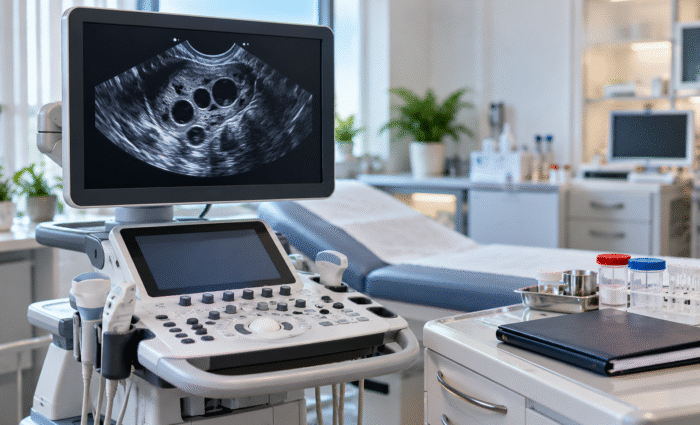
Step 3: Ultrasound Examination
A pelvic or transvaginal ultrasound can provide information about the ovaries and uterus.
It may help identify conditions such as fibroids, ovarian abnormalities or other structural issues that could influence fertility.
Step 4: Fallopian Tube Assessment
Tests such as a hysterosalpingogram (HSG) may be recommended to assess whether the fallopian tubes are open.
Tubal assessment can be particularly relevant where there’s a history of pelvic infection, surgery or other risk factors for tubal damage.
Step 5: Semen Analysis
Male fertility evaluation shouldn’t be postponed while only the woman undergoes testing.
A semen analysis assesses important sperm characteristics and can help identify potential male-factor infertility.
A proper secondary infertility assessment should consider both partners wherever applicable.
Secondary Infertility Treatment Options in Ondo
There isn’t one universal treatment for secondary infertility.
The right approach depends on factors including:
- The underlying cause
- Female partner’s age
- Ovarian reserve
- Sperm quality
- Whether the fallopian tubes are open
- How long you’ve been trying
- Previous fertility treatments
- Overall reproductive health
Depending on the results of your fertility evaluation, treatment may include the following.
Fertility Medication
When ovulation problems are identified, fertility medications may sometimes be prescribed to stimulate or regulate ovulation.
The medication used—and whether medication is appropriate at all—depends on the diagnosis.
Fertility drugs should be used under appropriate medical supervision rather than taken simply because pregnancy is taking longer than expected.
Treatment of Underlying Reproductive Conditions
Sometimes fertility treatment means treating the condition interfering with conception.
For example, management may be required for certain cases involving PCOS, fibroids, endometriosis or other gynaecological conditions.
The goal is to develop treatment around the actual diagnosis rather than applying the same fertility procedure to every patient.
Intrauterine Insemination (IUI)
Intrauterine insemination (IUI) involves preparing sperm in a laboratory and placing it directly into the uterus around the time of ovulation.
IUI may be considered in selected cases involving mild male-factor infertility, ovulatory problems, cervical factors or unexplained infertility.
It isn’t suitable for every couple, which is why testing before treatment matters.
In Vitro Fertilization (IVF)
With in vitro fertilization (IVF), eggs are retrieved from the ovaries and fertilized with sperm in a laboratory. The resulting embryo or embryos are then considered for transfer to the uterus.
IVF may be recommended in situations such as significant tubal problems, certain male fertility problems, prolonged infertility, unsuccessful previous treatments or other circumstances where simpler treatments are unlikely to be effective.
IVF shouldn’t automatically be assumed to be the first treatment for every case of secondary infertility.
IVF With ICSI
Intracytoplasmic sperm injection (ICSI) is an assisted reproductive technique commonly used alongside IVF.
During ICSI, an embryologist injects a selected sperm directly into an egg to facilitate fertilization.
It may be considered in certain cases of male-factor infertility or where there are specific concerns about fertilization.
Your fertility specialist can determine whether conventional IVF or IVF with ICSI is more appropriate based on your results.
Does Secondary Infertility Always Mean You Need IVF?
No.
This is one of the biggest misconceptions surrounding infertility treatment.
Some people may benefit from treating an underlying condition, ovulation management or IUI. Others may have circumstances where IVF offers a more appropriate route.
The key question isn’t simply:
“Do I need IVF?”
It’s:
“Why am I having difficulty conceiving again, and which treatment gives me a reasonable chance based on my diagnosis?”
That’s a much better starting point.
Secondary Infertility Treatment at Netcare IVF | Fertility Centre in Akure, Ondo State
For individuals and couples searching for secondary infertility treatment in Ondo State, Netcare IVF | Fertility Centre provides fertility evaluation and assisted reproductive services from its clinic in Ijapo Estate, Akure.
Available fertility services include:
- Fertility testing
- Semen analysis
- Intrauterine insemination (IUI)
- In vitro fertilization (IVF)
- Intracytoplasmic sperm injection (ICSI)
- Fertility preservation
- Gynaecological services
- Egg and sperm donation programmes
- Other assisted reproductive treatment options
Rather than assuming that your previous ability to conceive means everything is still the same, a current fertility assessment can help establish what has changed and which options may be appropriate now.
Netcare IVF | Fertility Centre is located at 10 Owo Avenue, opposite Royal Birds Hotel, Ijapo Estate, Akure, Ondo State, Nigeria.
Common Mistakes Couples Make When Facing Secondary Infertility
Assuming fertility is fine because you’ve conceived before
A previous pregnancy provides useful medical information, but fertility can change. Age, health conditions and reproductive factors can all be different several years later.
Testing only the woman
Infertility can involve female factors, male factors, both partners or sometimes remain unexplained after standard testing.
Where applicable, both partners should be evaluated.
Waiting too long before getting evaluated
This can be particularly important when the woman is 35 or older because female fertility declines with age.
Getting evaluated doesn’t mean you’ll automatically start IVF. It simply gives you better information.
Starting treatment without adequate testing
Jumping straight into medication or assisted reproduction without understanding the likely cause may lead to unnecessary treatment.
A structured fertility assessment helps your specialist choose a treatment based on evidence rather than guesswork.
Take the Next Step
Trying for another child and not becoming pregnant can be difficult, especially when conception happened more easily in the past. But a previous pregnancy doesn’t rule out a new fertility issue—and secondary infertility doesn’t automatically mean IVF is your only option.
The useful next step is to find out what may be preventing pregnancy now.
If you’ve been trying to conceive again without success, a comprehensive fertility evaluation can assess both female and male factors and help determine an appropriate treatment pathway.
Netcare IVF | Fertility Centre provides secondary infertility evaluation and fertility treatment in Akure, Ondo State. Schedule a fertility consultation to discuss your reproductive history, current concerns and available treatment options.
What is the main cause of secondary infertility?
There isn’t one main cause that applies to everyone. Secondary infertility may result from age-related fertility changes, ovulation disorders, blocked fallopian tubes, fibroids, endometriosis, male-factor infertility or other reproductive conditions. Some cases remain unexplained after routine testing.
Can I have secondary infertility even if my first pregnancy happened naturally?
Yes. Secondary infertility occurs after a previous pregnancy has been achieved. Fertility circumstances can change over time, so having conceived naturally before doesn’t guarantee that another pregnancy will happen easily.
Can secondary infertility be treated?
Yes, many causes can be managed or treated, but the appropriate treatment depends on the diagnosis. Options may include fertility medication, management of an underlying condition, IUI, IVF or IVF with ICSI.
Do both partners need fertility testing?
Where applicable, yes. Fertility evaluation should consider both partners because male and female factors can contribute to difficulty conceiving. Semen analysis is an important part of the initial evaluation of many couples
When should I seek secondary infertility treatment in Ondo?
If you’re under 35, consider an evaluation after 12 months of regular unprotected intercourse without pregnancy. If you’re 35 or older, evaluation is generally recommended after six months. Earlier assessment may be appropriate if you’re over 40 or already have a condition known to affect fertility.
Is IVF the best treatment for secondary infertility?
Not necessarily. IVF can be highly useful for certain fertility problems, but some patients may have other appropriate options. Your age, test results, fertility history and underlying diagnosis should guide the decision.
Where can I get secondary infertility treatment in Akure?
Netcare IVF | Fertility Centre provides fertility testing and treatments including IUI, IVF and ICSI at 10 Owo Avenue, opposite Royal Birds Hotel, Ijapo Estate, Akure, Ondo State.
Take the Next Step
Trying for another child and not becoming pregnant can be difficult, especially when conception happened more easily in the past. But a previous pregnancy doesn’t rule out a new fertility issue—and secondary infertility doesn’t automatically mean IVF is your only option.
The useful next step is to find out what may be preventing pregnancy now.
If you’ve been trying to conceive again without success, a comprehensive fertility evaluation can assess both female and male factors and help determine an appropriate treatment pathway.
Netcare IVF | Fertility Centre provides secondary infertility evaluation and fertility treatment in Akure, Ondo State. Schedule a fertility consultation to discuss your reproductive history, current concerns and available treatment options.