
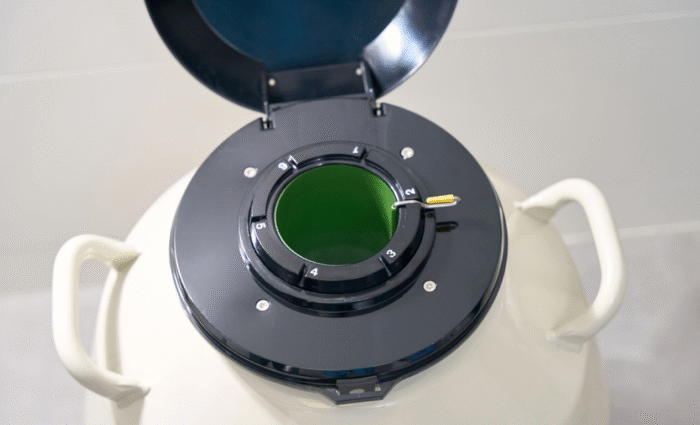

Preserving your fertility is one of the most empowering decisions you can make for your future family, but navigating the medical details can feel overwhelming. Embryo freezing storage Nigeria is an advanced laboratory procedure where embryos created through In Vitro Fertilization (IVF) are preserved at ultra-low temperatures (-196°C) in liquid nitrogen.
This technique—known as vitrification—essentially pauses cellular biological activity indefinitely. It allows individuals and couples to preserve their fertility for future pregnancy attempts without losing embryo quality or vitality over time.
At Netcare IVF & Fertility Centre, we provide state-of-the-art embryo cryopreservation and long-term bio-banking. Whether you are currently undergoing an active IVF cycle, facing medical treatments that could compromise your reproductive health, or simply planning family expansion on your own timeline, this complete clinical guide breaks down everything you need to know about embryo storage in Nigeria.
Direct Answer Summary: Quick Facts on Embryo Storage in Nigeria
| Key Aspect | Details & Clinical Benchmarks |
| Primary Technology | Vitrification (ultra-rapid flash-freezing technique) |
| Storage Medium | Specialized liquid nitrogen vacuum dewars maintained at -196°C |
| Maximum Storage Duration | Indefinite (clinically proven safe for 10–20+ years) |
| Pricing Structure | Initial vitrification fee + recurring annual/quarterly storage maintenance fee |
| Post-Thaw Survival Rate | 95% – 98% in advanced embryology laboratories |
| Legal Framework | Governed via informed consent agreements and AFRH clinical guidelines |
What is Embryo Freezing (Cryopreservation)?
At its core, embryo freezing is a sophisticated reproductive technique performed inside a specialized embryology laboratory. The process begins similarly to a standard IVF cycle: following ovarian stimulation and egg retrieval, eggs are fertilized with sperm using standard In Vitro Fertilization (IVF) or Intracytoplasmic Sperm Injection (ICSI).
Once the resulting embryos mature—typically reaching the highly developed Day 5 or Day 6 blastocyst stage—they are thoroughly evaluated by an embryologist, safely frozen, and placed into dedicated bio-storage tanks.
  [ Step 1: Ovarian Stimulation ]
                 │
                 ▼
     [ Step 2: Egg Retrieval ]
                 │
                 ▼
  [ Step 3: IVF / ICSI Fertilization ]
                 │
                 ▼
  [ Step 4: Blastocyst Cultivation (Day 5/6) ]
                 │
                 ▼
   [ Step 5: Vitrification (Flash Freezing) ]
                 │
                 ▼
[ Step 6: Liquid Nitrogen Storage (-196°C) ]
                 │
                 ▼
  [ Step 7: Thaw & Frozen Embryo Transfer (FET) ]
The Technological Evolution: Slow Freezing vs. Vitrification
To truly appreciate modern fertility preservation, it helps to understand how far reproductive science has come. Historically, fertility laboratories relied on a method known as “slow freezing.” This older protocol cooled embryos gradually over several hours.
While innovative for its time, slow freezing had a major drawback: it allowed microscopic ice crystals to form inside delicate cellular structures. These ice crystals acted like tiny needles, occasionally tearing cell membranes and damaging the embryo during the thawing process.
Modern fertility facilities, including Netcare IVF & Fertility Centre, exclusively utilize vitrification. Vitrification is an ultra-rapid flash-freezing method that uses specialized high-concentration cryoprotectants—solutions that act like biological antifreeze.
Instead of cooling slowly, embryos are plunged directly into liquid nitrogen, dropping their temperature almost instantly. This process turns the fluid inside the cells into a glass-like solid state without forming any destructive ice crystals. Thanks to vitrification, post-thaw survival rates in top-tier embryology labs have skyrocketed from around 60% with slow freezing to well over 95% today.
Take the Next Step with Netcare IVF
Whether you are ready to begin an IVF cycle, looking to preserve your fertility for the future, or seeking a secure facility to store your embryos, the expert team at Netcare IVF & Fertility Centre is here to guide you with care and clinical excellence.
Why Choose Embryo Freezing? Key Clinical and Personal Reasons
Deciding to freeze embryos isn’t just about delaying parenthood; it is a strategic clinical tool that enhances safety, flexibility, and success rates across a variety of life circumstances.
1. Higher Cumulative Success Per IVF Cycle
A single egg retrieval procedure often yields multiple viable embryos. In early IVF practices, clinicians would transfer several fresh embryos at once to boost pregnancy odds—a practice that frequently led to high-risk multiple pregnancies (triplets or high-order twins).
Today, best practice involves transferring one high-grade embryo fresh and vitrifying the rest. If that initial transfer does not result in pregnancy, or if you return years later for another child, your frozen embryos can be thawed and transferred in a Frozen Embryo Transfer (FET) cycle. This eliminates the need to repeat painful hormone injections, invasive egg retrievals, and expensive medication protocols.
2. Prevention of Ovarian Hyperstimulation Syndrome (OHSS)
During ovarian stimulation, some women’s ovaries respond excessively to fertility drugs, producing a high number of eggs. This can trigger Ovarian Hyperstimulation Syndrome (OHSS), a potentially severe medical condition marked by fluid retention, abdominal pain, and systemic stress.
In these cases, carrying out a fresh embryo transfer can worsen OHSS because pregnancy hormones exacerbate the condition. By choosing a “Freeze-All” protocol, clinicians freeze every viable embryo and wait for the woman’s body and hormone levels to return to baseline. The embryos are later transferred into a calm, receptive uterine environment, prioritizing maternal safety without compromising cycle success.
3. Preimplantation Genetic Testing (PGT)
For couples carrying known genetic conditions, structural chromosome rearrangements, or women managing recurrent pregnancy loss, embryo freezing offers a critical window for genetic screening.
Embryologists perform a delicate biopsy on Day 5 or 6 blastocysts, removing a few cells from the outer layer (which becomes the placenta) without harming the inner cell mass (which becomes the baby). While these genetic samples undergo complex DNA sequencing (PGT-A for chromosomal abnormalities or PGT-M for specific genetic mutations), the embryos are vitrified and safely stored. Only chromosomally healthy embryos are selected for future transfer.
4. Family Building Across Years
Fertility naturally declines with age, largely driven by a reduction in egg quality. Freezing high-quality embryos created when a woman is younger effectively locks that egg quality in time.
If a couple achieves a live birth through their first IVF cycle, their remaining banked embryos retain the biological age of the woman at the time of egg collection. This allows families to space their children comfortably over three, five, or even ten years without facing the age-related decline in fertility they might otherwise experience in later years.
5. Medical Fertility Preservation (Oncofertility)
A cancer diagnosis or a major medical condition requiring gonadotoxic treatments (such as chemotherapy, pelvic radiation, or surgeries that impact reproductive organs) can compromise or permanently eliminate future fertility.
Embryo cryopreservation offers men and women a vital opportunity to secure biological offspring prior to commencing harsh medical therapies. Once the patient has completed treatment and received a clean bill of health, their stored embryos are ready for transfer.
The Step-by-Step Process of Embryo freezing storage Nigeria
Navigating fertility treatment is far less daunting when you know exactly what happens behind the clinic doors. Here is a comprehensive walkthrough of how embryo cryopreservation works from start to finish:
Phase 1: Comprehensive Baseline Evaluation & Infectious Disease Screening
Before any lab work begins, both partners undergo thorough diagnostic evaluations. This includes hormonal profiling (AMH, FSH, LH), pelvic ultrasound scans to assess ovarian reserve, and semen analysis.
Crucially, both partners must undergo mandatory infectious disease screenings for HIV 1 & 2, Hepatitis B, Hepatitis C, and Syphilis. This step is essential for biosecurity; it ensures that samples are properly classified and stored in segregated liquid nitrogen tanks, eliminating any risk of cross-contamination between patients’ samples.
Phase 2: Controlled Ovarian Stimulation & Monitoring
To maximize the chances of creating viable embryos, injectable fertility medications are administered over 10 to 14 days. These hormones encourage multiple ovarian follicles to grow simultaneously rather than the single follicle typical of a natural menstrual cycle.
Throughout this phase, you will visit the clinic for transvaginal ultrasounds and blood tests to track follicle growth and fine-tune drug dosages. Once the leading follicles reach the optimal size, a “trigger shot” injection is administered to finalize egg maturation.
Phase 3: Egg Retrieval & Advanced Fertilization
Approximately 34 to 36 hours after the trigger shot, eggs are retrieved in a minor, minimally invasive procedure performed under light conscious sedation. Guided by transvaginal ultrasound, the specialist aspirates fluid from the follicles to collect the mature eggs.
On the same day, sperm is prepared in the lab. Depending on semen quality and clinical history, eggs are fertilized either through standard IVF (mixing eggs and sperm in a dish) or ICSI (injecting a single healthy sperm directly into each mature egg).
Phase 4: Blastocyst Cultivation & Assessment
Fertilized eggs (now zygotes) are placed inside state-of-the-art incubators that mimic the environment of the human fallopian tubes and uterus. The embryology team monitors their growth for 5 to 6 days as they divide from single cells into complex multi-cell structures containing over 100 cells—known as blastocysts. Blastocysts are graded based on the structural integrity of their inner cell mass and outer trophectoderm layer.
Phase 5: Vitrification (Flash Freezing)
Only top-quality, viable blastocysts are selected for storage. The embryologist carefully extracts cellular fluid from the embryo using specialized cryoprotectant solutions, places the embryo onto a micro-straw delivery device, and instantly immerses it into liquid nitrogen. The temperature drops rapidly to -196°C, completing the vitrification process in a fraction of a second.
Phase 6: Bio-Storage Maintenance
The straws containing vitrified embryos are carefully placed inside designated, labeled canisters within heavy-duty liquid nitrogen vacuum dewars. These storage units maintain ultra-low temperatures continuously without relying on electrical power.
Phase 7: Thawing & Frozen Embryo Transfer (FET)
When you are ready to attempt pregnancy, the uterus is prepared using hormonal therapy (or aligned with your natural menstrual cycle) to ensure the endometrial lining is thick and receptive. On transfer day, the embryo is rapidly thawed, reassessed under a microscope for viability, and gently placed into the uterus using a fine catheter.
Understanding the Financial Framework of Embryo Storage in Nigeria
Financial clarity helps alleviate stress during fertility treatment. Rather than looking at a single figure, it helps to understand that embryo cryopreservation and long-term storage involve distinct billing stages:
[ Total Embryo Storage Investment ]
        │
        ├── 1. Initial Vitrification Fee (Covers immediate lab work & consumables)
        ├── 2. Storage Maintenance Fee (Billed annually or quarterly to maintain tanks)
        └── 3. Frozen Embryo Transfer (FET) Fee (Billed when you decide to use your embryos)
- Initial Vitrification Laboratory Fee: This one-time fee covers the immediate laboratory labor, cryoprotectant solutions, freezing straws, and technical expertise required to safely vitrify your embryos following an egg retrieval cycle.
- Recurring Storage Maintenance Fee: Bio-storage requires ongoing maintenance, including continuous liquid nitrogen refills, routine equipment servicing, manual tank audits, and round-the-clock environmental monitoring. This fee is typically charged annually or quarterly. Clinics generally offer multi-year package discounts for patients planning long-term storage.
- Frozen Embryo Transfer (FET) Fee: It is important to note that the storage fee covers keeping the embryos safe; it does not include the future medical procedures needed to transfer them. When you are ready to use your stored embryos, a separate FET fee covers cycle monitoring, uterine preparation, embryo thawing, and the transfer procedure itself.
At Netcare IVF & Fertility Centre, we believe in total financial transparency. We provide clear, itemized cost outlines upfront so you can plan your family journey without unexpected financial surprises down the road.
Legal, Ethical, and Consent Considerations in Nigeria
Because embryo storage involves human genetic material intended for future life, clear legal and ethical guardrails are essential. In Nigeria, assisted reproductive care is guided by international clinical standards alongside frameworks established by the Association for Reproductive and Clinical Health (AFRH) and Nigerian contract law.
Before any freezing procedure takes place, both partners (or the individual parent) must sign a detailed, legally binding Consent for Cryopreservation and Storage Agreement. This contract ensures that everyone’s rights and intentions are fully documented before the embryos are placed into storage. Key issues addressed in these agreements include:
- Designated Storage Duration: Documenting how long you intend to keep your embryos stored and establishing protocols for extending agreements.
- Ownership and Authority: Defining who holds legal authority over the embryos (typically both partners jointly in a couple) and how clinical decisions regarding their use must be authorized.
- Disposition Provisions: Life can be unpredictable. Consent documents explicitly define what should happen to stored embryos under special circumstances, such as:
- The death or incapacitation of one or both partners.
- Legal separation or divorce.
- Abandonment of storage or non-payment of annual storage maintenance fees.
- Options for Unused Embryos: If you complete your family and still have frozen embryos remaining, you have choices regarding their disposition. Options include authorized ethical disposal according to strict medical protocols, donation to medical research to help advance reproductive science, or altruistic donation to another infertile couple struggling to achieve parenthood.
How Long Can Embryos Be Safely Stored?
A common question patients ask is whether embryos “expire” after years in storage. The short answer is no; theoretically, embryos can remain frozen indefinitely.
Because vitrification brings embryos to -196°C in liquid nitrogen, all biological activity—including cellular aging, enzymatic activity, and metabolic decay—comes to a complete halt. The embryo essentially exists outside of time.
Clinical studies and real-world outcomes support this reality. Healthy, normal babies have been successfully born from embryos that remained vitrified in liquid nitrogen storage for more than 25 to 30 years.
Data shows that the length of time an embryo spends in storage has no negative effect on thaw survival rates, implantation rates, or pregnancy outcomes. The primary factor determining future success is not how long the embryo was frozen, but the quality of the egg and embryo at the exact time it was vitrified.
Why Choose Netcare IVF & Fertility Centre for Your Embryo Storage?
Selecting a fertility center to safeguard your future family is a deeply personal decision. Located in the peaceful environment of Ijapo Estate, Akure, Ondo State, Netcare IVF & Fertility Centre offers advanced technology combined with compassionate, patient-centered care.
┌─────────────────────────────────────────────────────────────────┐
│                     NETCARE IVF ADVANTAGES                      │
├────────────────────────────────┬────────────────────────────────┤
│ 🔬 Advanced Vitrification Tech  │ 🛡️ Fail-Safe Storage Systems   │
│ High-precision laboratory      │ Multi-tiered tank monitoring   │
│ protocols for top survival.    │ ensuring total liquid integrity.│
├────────────────────────────────┼────────────────────────────────┤
│ 💳 Transparent Pricing Structure│ 🌍 Seamless Medical Tourism    │
│ Clear, honest fee schedules    │ Dedicated support for patients │
│ with zero hidden surprises.     │ traveling across Nigeria/abroad.│
└────────────────────────────────┴────────────────────────────────┘
- Advanced Embryology Expertise: Our laboratory team utilizes precise vitrification techniques and top-tier culture media to maintain consistently high post-thaw embryo survival rates.
- Fail-Safe Bio-Banking Systems: Our liquid nitrogen storage tanks operate with multi-tiered safety measures. Because liquid nitrogen vacuum dewars do not rely on local electrical grids, your embryos remain continuously protected regardless of power supply stability. Routine manual inspections and liquid level monitoring add an extra layer of oversight.
- Serene, Stress-Free Care: Nestled in a quiet location, our facility allows patients to undergo fertility treatments away from the high stress and busy traffic of major commercial hubs.
- Comprehensive Care for Traveling Patients: For patients traveling from Lagos, Abuja, Port Harcourt, or abroad (including the UK, Europe, and North America), our clinical coordinators assist with remote monitoring schedules, travel arrangements, and comfortable local accommodations to make your treatment journey seamless.
Frequently Asked Questions (FAQ)
Is a child born from a frozen embryo as healthy as one from a fresh embryo?
Yes, absolutely. Extensive medical research tracking hundreds of thousands of births globally over decades shows that children conceived via Frozen Embryo Transfers (FET) are just as healthy as those conceived through fresh IVF transfers or natural conception. In fact, some studies indicate that FET cycles may result in slightly higher birth weights and lower risks of premature delivery because the maternal uterine lining is given time to settle naturally without the influence of high stimulation hormones.
Can I transfer my stored embryos to another clinic in the future?
Yes. Stored embryos remain your legal property. If you relocate to another state, move abroad, or wish to transfer your care to another facility, embryos can be safely transported between accredited embryology laboratories using specialized, temperature-monitored “dry shippers” designed specifically for cryogenic medical transport.
How do power fluctuations in Nigeria affect stored embryos?
Embryo storage dewars do not rely on electricity. They are double-walled, high-vacuum stainless steel vessels filled with ultra-cold liquid nitrogen that maintains a constant internal environment of -196°C purely through insulation and liquid density. Power outages have zero effect on the internal temperature of storage tanks. Netcare IVF maintains strict supply protocols for liquid nitrogen refills to keep every tank safely operating at optimal levels.
Does the freezing or thawing process damage the embryo?
While no medical procedure carries a 100% guarantee, modern vitrification has minimized cellular risk. In well-equipped embryology laboratories, over 95% of vitrified embryos survive the thawing process intact, healthy, and fully viable for transfer.
Take the Next Step with Netcare IVF
Whether you are ready to begin an IVF cycle, looking to preserve your fertility for the future, or seeking a secure facility to store your embryos, the expert team at Netcare IVF & Fertility Centre is here to guide you with care and clinical excellence.