
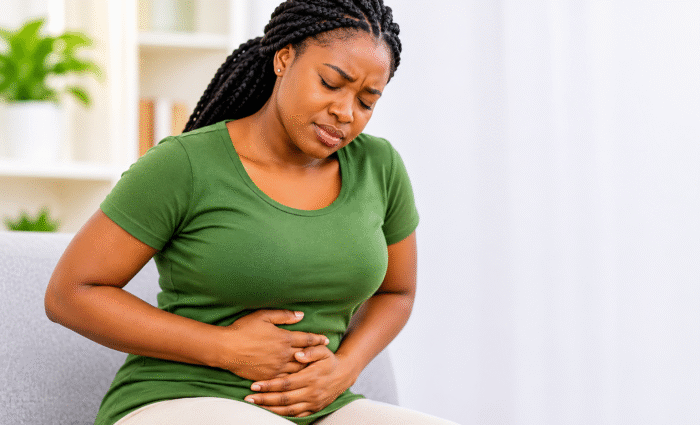

What are the common ovarian cyst symptoms?
An ovarian cyst can sound worrying when it appears on an ultrasound report, especially if you weren’t expecting to find anything wrong. But finding a cyst doesn’t automatically mean something serious is happening.
Ovarian cysts are fluid-filled sacs that develop in or on an ovary. They’re common, particularly during the reproductive years, and many cause no symptoms at all. In fact, some develop as part of the normal menstrual cycle and disappear without treatment.
Still, ovarian cysts shouldn’t simply be ignored. Their size, appearance, symptoms and the circumstances in which they develop can all influence whether monitoring or treatment is appropriate.
Here’s what you need to know.
What Is an Ovarian Cyst?
An ovarian cyst is a sac, usually containing fluid, that develops inside an ovary or on its surface. The ovaries naturally undergo changes throughout the menstrual cycle. Each month, a follicle develops to hold a maturing egg. Around ovulation, that follicle normally releases the egg.
Sometimes, however, the follicle continues growing instead of releasing the egg, or fluid collects in it after ovulation. This can result in a functional ovarian cyst. These cysts are generally benign and often resolve on their own within a few menstrual cycles.
Not every ovarian cyst develops this way, though. Some are associated with conditions such as endometriosis, while others arise from different types of ovarian cells.
What Are the Symptoms of an Ovarian Cyst?
Many ovarian cysts produce no noticeable symptoms. A cyst may only be discovered during a pelvic ultrasound or an examination performed for another reason.
When symptoms do occur, they can vary depending on the cyst’s size, type and whether complications have developed.
Possible ovarian cyst symptoms include:
- Pelvic or lower abdominal pain
- A dull ache or feeling of heaviness in the pelvis
- Abdominal pressure or fullness
- Bloating
- Pain during sexual intercourse
- Changes in menstrual periods
- Needing to urinate more frequently
- Difficulty emptying the bowels
- Feeling full sooner than expected after eating
Pelvic pain associated with a cyst isn’t always constant. For some women, it comes and goes. Others may notice discomfort predominantly on one side of the lower abdomen.
These symptoms aren’t unique to ovarian cysts, however. Endometriosis, uterine fibroids, pelvic infections, urinary problems and other conditions can cause similar symptoms. That’s one reason persistent pelvic symptoms deserve proper evaluation rather than self-diagnosis.
What Causes Ovarian Cysts?
There isn’t one single cause of ovarian cysts. The cause largely depends on the type of cyst involved.
1. Normal Ovulation
Many ovarian cysts develop as part of the menstrual cycle.
These are called functional cysts, and two common forms are follicular cysts and corpus luteum cysts. A follicular cyst can develop when a follicle grows but doesn’t rupture to release its egg.
A corpus luteum cyst can develop after ovulation when fluid collects inside the structure left behind by the follicle. Functional cysts are usually harmless and commonly disappear without intervention.
2. Endometriosis
Endometriosis occurs when tissue similar to the lining of the uterus grows outside the uterus. When this tissue involves an ovary, it can form a cyst known as an endometrioma, sometimes referred to as a “chocolate cyst” because of the old blood it may contain.
Endometriomas may be associated with pelvic pain and, in some women, fertility difficulties.
3. Dermoid Cysts
Dermoid cysts, also called mature cystic teratomas, develop from reproductive cells in the ovary. Because these cells can develop into different types of tissue, dermoid cysts may contain material such as hair, skin or teeth.
That may sound alarming, but dermoid cysts are usually benign.
4. Cystadenomas
Cystadenomas develop from cells on the surface of an ovary and may contain watery or mucus-like fluid.
Some remain relatively small, while others can become quite large and may require treatment depending on their characteristics and symptoms.
5. Pregnancy
An ovarian cyst can occasionally persist during pregnancy. For example, the corpus luteum normally supports early pregnancy by producing hormones. Sometimes it remains enlarged or develops into a cyst.
Many pregnancy-associated cysts resolve without intervention, but monitoring may be recommended depending on their appearance and size.
Are Ovarian Cysts the Same as PCOS?
No.
This is a common source of confusion. Having an ovarian cyst does not automatically mean you have polycystic ovary syndrome (PCOS).
PCOS is a hormonal and metabolic condition that can affect ovulation. Despite its name, the small follicles commonly seen in polycystic ovaries are not the same thing as having a typical ovarian cyst.
A diagnosis of PCOS is therefore based on a broader assessment that may include menstrual history, signs of excess androgen activity, blood tests and ultrasound findings.
Can Ovarian Cysts Affect Fertility?
This depends largely on the type of cyst. Many functional ovarian cysts don’t significantly affect fertility and disappear naturally. Other conditions associated with ovarian cysts can have a greater relationship with fertility.
Endometriomas, for example, are associated with endometriosis, a condition that can affect fertility in some women. Treatment decisions also matter.
If ovarian surgery is being considered in someone who hopes to become pregnant in the future, the potential effect of surgery on healthy ovarian tissue and ovarian reserve should form part of the discussion with the treating specialist.
So the question isn’t simply, “Do I have a cyst?”
A more useful question is:
What type of cyst is it, and does it affect my reproductive health or treatment plan?
How Are Ovarian Cysts Diagnosed?
An ovarian cyst may first be suspected because of symptoms or discovered unexpectedly during an examination or imaging test.
Pelvic Ultrasound
Ultrasound is commonly used to evaluate ovarian cysts.
It helps a clinician assess important features such as:
- The cyst’s size
- Its location
- Whether it appears simple or complex
- Whether it contains mainly fluid, solid components or a mixture
- Changes in its appearance over time
A transvaginal ultrasound may provide a detailed view of the ovaries and surrounding reproductive structures.
Medical History and Examination
Your clinician may also ask about:
- Pelvic pain
- Menstrual changes
- Previous ovarian cysts
- Pregnancy possibility
- Fertility concerns
- Endometriosis
- Menopausal status
- Other relevant medical or family history
These details help place the ultrasound findings in context.
Blood Tests
Blood tests may sometimes be recommended depending on the appearance of the cyst, symptoms, age and other risk factors.
For example, a clinician may request tumour-marker testing if an ovarian mass has features that require further investigation. An abnormal result does not automatically mean ovarian cancer because non-cancerous conditions can also affect some tumour-marker levels.
Does Every Ovarian Cyst Need Treatment?
No.
Many ovarian cysts don’t need immediate treatment.
If a cyst appears uncomplicated and isn’t causing concerning symptoms, a clinician may recommend watchful waiting. This usually means monitoring symptoms and repeating an ultrasound after a period of time to see whether the cyst has changed or disappeared.
The decision depends on several factors, including:
- Your age
- Whether you’ve reached menopause
- The size of the cyst
- Its ultrasound appearance
- Whether it persists
- Your symptoms
- Your reproductive plans
- Whether there are concerning features
There isn’t one treatment plan that fits every ovarian cyst.
When Might Treatment Be Needed?
Treatment may be considered when a cyst:
- Persists rather than resolving
- Becomes large
- Causes significant or ongoing symptoms
- Has unusual or complex features on imaging
- Is associated with complications
- Raises concern for malignancy
The exact treatment depends on the individual situation.
Monitoring
For many uncomplicated cysts, monitoring is all that’s necessary. Your clinician may recommend a repeat ultrasound after several weeks or months to see whether the cyst has disappeared, remained stable or changed.
Managing an Underlying Condition
Sometimes the focus isn’t simply the cyst itself. For example, if an endometrioma is associated with endometriosis, treatment decisions may take into account pain, fertility plans, age, ovarian reserve and previous treatment.
Surgery
Some ovarian cysts may need surgical removal. When surgery is appropriate, it may be performed using laparoscopy, commonly called keyhole surgery, or through a larger abdominal incision known as a laparotomy, depending on the circumstances.
Whenever possible in someone who wishes to preserve fertility, treatment may aim to remove the cyst while preserving healthy ovarian tissue.
That decision needs to be individualised. The type of cyst, its size, symptoms, ultrasound appearance and the patient’s reproductive plans all matter.
When Is an Ovarian Cyst an Emergency?
Most ovarian cysts aren’t emergencies. But two complications deserve particular attention: ovarian torsion and cyst rupture or bleeding.
Ovarian Torsion
Ovarian torsion occurs when an ovary twists around the tissues supporting it, potentially reducing or cutting off its blood supply. A larger ovarian cyst or mass can increase the likelihood of the ovary twisting.
Possible symptoms include:
- Sudden, severe pelvic or lower abdominal pain
- Nausea
- Vomiting
Ovarian torsion requires urgent medical assessment.
Ruptured Ovarian Cyst
An ovarian cyst can sometimes rupture. The severity varies. Some ruptured cysts cause manageable discomfort, while others can cause severe pain or internal bleeding.
Seek urgent medical attention for sudden, severe pelvic or abdominal pain, particularly when it occurs with vomiting, fever, marked weakness, dizziness or fainting. Don’t assume severe pain is simply a normal period symptom.
Common Myths About Ovarian Cysts
Myth 1: Every ovarian cyst needs surgery
No. Many ovarian cysts resolve naturally and can be monitored rather than surgically removed.
Myth 2: An ovarian cyst means cancer
Most ovarian cysts are benign. However, certain features, symptoms and age-related factors may prompt further investigation.
Myth 3: Having a cyst means you can’t get pregnant
Not necessarily. Many ovarian cysts don’t interfere with fertility.
The underlying cause is often more important than the presence of the cyst itself.
Myth 4: PCOS means you have large ovarian cysts
PCOS and a typical ovarian cyst are not the same condition. PCOS involves hormonal and ovulatory changes and may be associated with multiple small ovarian follicles.
Myth 5: No pain means the cyst doesn’t matter
Some ovarian cysts cause no symptoms at all. Whether a cyst requires follow-up depends on more than pain alone.
What Should You Do If an Ultrasound Shows an Ovarian Cyst?
First, don’t panic. The word “cyst” by itself tells you very little about what happens next.
Ask your healthcare provider:
- What type of ovarian cyst does it appear to be?
- How large is it?
- Does the ultrasound show any features that need further investigation?
- Should the scan be repeated?
- Could this cyst explain my symptoms?
- Could the cyst or its treatment affect my fertility?
- What symptoms would require urgent medical attention?
Those questions are far more useful than assuming every cyst needs to be removed.
Frequently Asked Questions About Ovarian Cysts
Can ovarian cysts disappear on their own?
Yes. Many functional ovarian cysts disappear naturally within a few menstrual cycles without treatment.
Should I see a fertility specialist if I have an ovarian cyst?
Not every ovarian cyst requires fertility treatment. But if you’re trying to conceive, have been experiencing difficulty becoming pregnant, have recurrent cysts or endometriosis, or are considering ovarian surgery, discussing your reproductive plans with an appropriate specialist can be useful.
Can an ovarian cyst come back after treatment?
Yes. Developing one ovarian cyst doesn’t guarantee that another will never form, particularly when cyst formation is related to ovulation or an underlying condition.
How do doctors know if an ovarian cyst needs surgery?
Doctors consider factors including the cyst’s size, appearance, persistence, symptoms, menopausal status and whether imaging raises concern about complications or malignancy.
Can ovarian cysts make it difficult to get pregnant?
Most ovarian cysts don’t prevent pregnancy. However, conditions associated with certain cysts, particularly endometriosis, can affect fertility in some women.
What does ovarian cyst pain feel like?
It may feel like a dull ache, pressure, heaviness or sharper pain in the lower abdomen or pelvis, sometimes more noticeable on one side. Sudden severe pain needs urgent assessment.
Can ovarian cysts cause irregular periods?
Some women with ovarian cysts experience menstrual changes, including heavier, lighter or irregular periods. Menstrual changes can have many other causes, however, so persistent changes should be evaluated.
Final Thoughts
Finding out that you have an ovarian cyst can create more questions than answers, but the diagnosis itself doesn’t automatically mean you need treatment.
Many ovarian cysts are benign, cause few or no symptoms and resolve without intervention. Others need monitoring, further investigation or treatment depending on their type, size, appearance and the symptoms they cause.
What matters is understanding what kind of cyst you’re dealing with and what it means for you.
If you’re experiencing persistent pelvic pain, changes in your menstrual cycle or concerns about how an ovarian condition may affect your fertility, a proper gynaecological assessment can help determine the next step.
For women and couples with fertility or reproductive-health concerns, Netcare Fertility Centre can provide individualised assessment and guidance based on your symptoms, reproductive history and fertility goals.
Medical Disclaimer: This article is for general educational purposes and isn’t a substitute for individual medical advice, diagnosis or emergency care. Seek prompt medical attention for sudden or severe pelvic or abdominal pain, especially when accompanied by vomiting, fever, dizziness, weakness or fainting.