
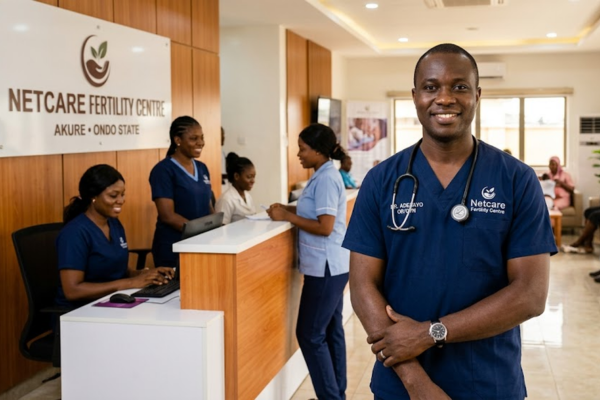

Deciding to explore In Vitro Fertilization (IVF) is a profound, deeply personal milestone. It is a decision typically born out of a mix of fierce hope, quiet vulnerability, and an immense emotional investment. For couples and individuals exploring IVF treatment in Ondo State, finding the right local medical partnership is the single most critical factor in transforming a complex clinical roadmap into a smooth, transparent, and ultimately life-changing experience.
The landscape of reproductive medicine in Southwestern Nigeria has evolved dramatically. Today, patients no longer need to face the disruptive logistics and prohibitive costs of traveling to Lagos or abroad to access premium, world-class fertility care.
This comprehensive guide breaks down everything you need to know about navigating fertility care locally—from decoding the intricate biological timelines and financial realities to identifying elite clinical infrastructure right here in Ondo State.
Understanding Infertility: When is it Time to Consider IVF?
Before diving into the mechanics of clinical procedures, it helps to ground the conversation in reality. Infertility is far more common than public conversations suggest. Globally and locally, millions of individuals navigate challenges when trying to conceive. Clinically, medical practitioners recommend a formal fertility evaluation if:
- You are under 35 and have been trying to conceive through regular, unprotected intercourse for 12 months without success.
- You are 36 or older and have been trying for 6 months, as ovarian reserve naturally declines more rapidly after this milestone.
- You have known underlying medical conditions, such as severe endometriosis, Polycystic Ovary Syndrome (PCOS), irregular menstrual cycles, pelvic inflammatory disease (PID), or known low sperm counts.
When early-stage interventions—such as lifestyle adjustments, ovulation induction medications, or Intrauterine Insemination (IUI)—do not yield results, IVF stands as the most definitive and highly successful path forward.
What Exactly is IVF?
In Vitro Fertilization is an advanced assisted reproductive technology (ART) where the magic of conception is carefully facilitated under the watchful eyes of specialized scientists. “In vitro” literally translates to “in glass,” referencing the specialized laboratory environment where a retrieved egg is combined with sperm outside the human body. Once fertilization occurs and the cells divide successfully, the resulting embryo is gently transferred back into the uterus to establish a healthy, full-term pregnancy.
For individuals dealing with blocked fallopian tubes, severe male factor infertility (such as low motility or low morphology), advanced maternal age, or unexplained infertility, IVF bypasses traditional biological roadblocks, offering the highest statistical probability of conception per cycle.
The Step-by-Step IVF Treatment Process
For many, the intimidation of IVF stems from the unknown. Breaking the treatment down into its core clinical phases reveals a manageable, highly structured timeline that typically spans roughly 4 to 6 weeks. Understanding this sequence helps eliminate anxiety and allows you to plan your professional and personal schedule with confidence.
- Comprehensive Diagnostics & Tailored Protocol Design: Phase 1.
Your journey does not begin with medication; it begins with data. Both partners undergo thorough testing. For women, this includes a transvaginal ultrasound to check the antral follicle count and blood tests to measure anti-Müllerian hormone (AMH) levels, which indicate ovarian reserve. For men, a detailed semen analysis evaluates count, motility, and shape. Your fertility specialist uses these precise markers to craft a personalized protocol, determining the exact dosages of medications required to maximize egg quality while protecting your physical health.
2. Ovarian Stimulation & Close Monitoring: Phase 2.
In a natural menstrual cycle, your body typically matures a single egg. In an IVF cycle, the goal is to safely encourage multiple follicles to grow simultaneously. Over a period of 10 to 12 days, you will self-administer daily subcutaneous injections of fertility medications. Throughout this phase, you will visit the clinic every few days for rapid monitoring ultrasounds and hormone tracking. These visits allow your clinical team to adjust medication dosages in real time, ensuring steady follicular growth.
3. The Trigger Injection & Egg Retrieval: Phase 3.
Once your follicles reach optimal maturity, a final hormonal injection—often called the “trigger shot”—is administered at a precise, calculated time. Exactly 34 to 36 hours later, the egg retrieval procedure takes place. This is a brief, 15-to-20-minute minor surgical procedure performed under light conscious sedation. Using a fine, ultrasound-guided needle passed through the vaginal wall, the specialist gently aspirates the fluid containing the eggs from your ovaries. You will rest in a recovery room for an hour or two afterward and can return home the same day.
4. Fertilization & Advanced Embryo Culture: Phase 4.
While the eggs are being retrieved, your partner or donor provides a semen sample, which is washed and concentrated in the laboratory. The embryology team then introduces the sperm to the eggs. If male factor infertility is present, the lab utilizes Intracytoplasmic Sperm Injection (ICSI), where a single, high-quality sperm is microscopically injected directly into each mature egg. The fertilized eggs are placed into advanced incubators that mimic the natural environment of the human fallopian tubes, where they are cultured for 3 to 5 days until they reach the blastocyst stage.
5. Embryo Selection, Optional Genetic Screening, and Transfer: Phase 5.
On transfer day, the medical team discusses the development of your embryos. If you opted for Preimplantation Genetic Testing (PGT-A or PGT-M), a tiny biopsy is safely taken from the embryos at this stage to screen for chromosomal abnormalities or specific hereditary genetic disorders before selection. Then, using a soft, ultra-thin catheter guided by abdominal ultrasound, the physician gently places the selected healthy embryo into your uterus. This procedure is completely painless, takes only a few minutes, and requires no anesthesia. Any remaining high-quality blastocysts are cryopreserved (frozen) using an ultra-rapid technique called vitrification, safeguarding them for future siblings or subsequent attempts.
Deconstructing the Costs of IVF in Nigeria
Let’s address the elephant in the room with absolute transparency: IVF is a significant financial investment. In Nigeria, navigating the cost of care requires a clear understanding of what a package includes to prevent unexpected financial stress midway through medical treatment.
Base IVF cycle costs across reputable, high-performing fertility clinics in Southwestern Nigeria typically range from ₦2,500,000 to ₦4,000,000. However, a realistic approach requires understanding why costs vary and what influences the final numbers:
+-----------------------------------------------------------------------+
|                      WHAT COMPRISES IVF COSTS?                       |
+----------------------------------+------------------------------------+
| Included in Standard Base Fees  | Potential Clinical Variables       |
+----------------------------------+------------------------------------+
| • Routine monitoring ultrasounds | • Ovarian stimulation medications  |
| • Surgical egg retrieval         |   (highly dependent on age/dosage) |
| • Standard embryology laboratory | • ICSI (for severe male factors)   |
| • The embryo transfer procedure  | • PGT-A Genetic Screening          |
| • Initial post-transfer care     | • Third-party donor programs       |
+----------------------------------+------------------------------------+
Navigating the Financial Commitment Flexibly
Because financial predictability directly impacts your stress levels, elite fertility centers provide specific clinical pathways and structured programs to help families balance their budgets effectively:
- Itemized, Upfront Cost Breakdowns: Clear contracts detailing what is included from day one, eliminating hidden laboratory, administrative, or emergency fees.
- Fertility Financing Packages: Collaborative partnerships with forward-thinking financial institutions or tailored internal milestone payment structures that spread investments across the clinical timeline rather than demanding full upfront lump sums.
- Shared Risk or Multi-Cycle Discounts: Subsidized package pricing designed for patients whose diagnostic profiles indicate they may require more than one retrieval cycle to safely achieve a healthy live birth.
Essential Benchmarks for Evaluating a Fertility Clinic
Selecting where to undergo IVF treatment is easily the most critical decision of your fertility journey. It is a choice that should be driven by rigorous standards, technological transparency, and clinical excellence. When evaluating clinics in Ondo State and surrounding regions, keep these four vital benchmarks in mind:
1. In-House Laboratories and Cutting-Edge Embryology
The lab is the heart of any fertility clinic; it is where early life is nurtured. A clinic is only as good as its embryology lab. Look for facilities featuring advanced clean-room environments with strict air filtration systems, high-magnification micromanipulators for ICSI procedures, and state-of-the-art incubators that maintain perfect temperature and gas balances. A clinic that outsources its laboratory services or relies on shared off-site processing introduces unnecessary transport variables that can drastically lower embryo survival rates.
2. A Dedicated, Specialized Clinical Team
Fertility care is a highly collaborative discipline. Your care should not rest on the shoulders of a general practitioner. True clinical success requires a cohesive, cross-functional team consisting of:
- Certified Reproductive Endocrinologists (fertility doctors) who carefully customize stimulation protocols.
- Experienced Embryologists who possess the delicate dexterity required to handle eggs, sperm, and embryos under microscopes.
- Compassionate Fertility Counselors and Nurses who understand the deep psychological toll of infertility and offer continuous mental and emotional support throughout your cycle.
3. Holistic and Advanced Add-On Treatments
No two fertility challenges are identical. A premier clinic should offer a comprehensive ecosystem of treatments tailored to nuanced diagnoses. This includes advanced therapies like Ovarian Rejuvenation (PRP) for patients with low ovarian reserve, Mesa/Tese surgical sperm retrieval for severe male blockages, and comprehensive, highly vetted third-party programs including egg donors, sperm donors, and legal surrogacy management.
4. A Restful, Secure Environment
The mind-body connection in reproductive health is well-documented; chronic stress can disrupt hormonal balances. Choosing a clinic situated in a secure, serene environment away from hectic urban traffic matters. A peaceful setting allows you to walk into every monitoring scan and procedure feeling calm, grounded, and focused on your healing.
Setting a New Standard in Akure: Netcare Fertility Centre
For residents seeking world-class reproductive care without the exhausting necessity of traveling to Lagos or dealing with long commutes, Netcare Fertility Centre stands out as a premier destination for local, national, and international patients.
Conveniently located in the secure and peaceful environment of Ijapo Estate in Akure, Ondo State, the centre perfectly bridges the gap between globally compliant scientific protocols and deeply personalized, empathetic patient care.
+--------------------------------------------------------------------------+
|                 WHY PATIENTS TRUST NETCARE FERTILITY CENTRE              |
+------------------------------------+-------------------------------------+
| Clinical Excellence                | Patient-Centric Support             |
+------------------------------------+-------------------------------------+
| • Advanced, in-house embryology    | • Serene, private clinic setting in |
|   and vitrification labs           |   the heart of Ijapo Estate, Akure  |
| • Full ICSI, PGT-A, and specialized| • Transparent, breakdown pricing with|
|   ovarian rejuvenation protocols   |   structured payment support        |
| • Strict compliance with global    | • Open, non-judgmental care for all |
|   assisted reproduction frameworks |   paths to parenthood               |
+------------------------------------+-------------------------------------+
Netcare’s medical philosophy is built entirely around inclusivity. The clinic provides a warm, respectful environment that welcomes individuals regardless of their age, marital status, or past IVF disappointments at other facilities.
By keeping all diagnostic testing, advanced embryology processing, and clinical procedures under one roof, Netcare ensures total quality control over your care. Here, you are never just a medical chart or a case number; you are a partner in a shared mission to bring your dream of a family to life.
Frequently Asked Questions (FAQ)
What is the success rate of IVF treatment in Ondo State?
IVF success rates are not a single, fixed percentage. They depend significantly on individual health factors, primarily maternal age and the specific underlying cause of fertility challenges.
That said, premium facilities like Netcare Fertility Centre maintain strict, state-of-the-art embryology lab protocols that achieve success rates fully on par with international benchmarks. Utilizing advanced selection strategies—such as blastocyst-stage cultures (growing embryos to day 5) or Preimplantation Genetic Testing (PGT)—further optimizes success rates per single embryo transfer.
What is the difference between conventional IVF and ICSI, and do I need it?
In conventional IVF, retrieved eggs and thousands of prepared sperm are placed together in a specialized laboratory dish, allowing fertilization to occur organically.
In Intracytoplasmic Sperm Injection (ICSI), an embryologist selects a single, structurally ideal, highly motile sperm and injects it directly into the cytoplasm of a mature egg using a high-precision microneedle. ICSI is highly recommended and incredibly effective if your partner has a low sperm count or poor motility, or if you have experienced unexplained fertilization failure in a previous IVF attempt.
Does Netcare Fertility Centre support long-distance or international patients?
Absolutely. Netcare Fertility Centre operates a highly coordinated care program designed specifically for long-distance patients and diaspora families visiting Nigeria.
Their dedicated Client Service Coordinators can organize initial consultations virtually via secure video calls, coordinate early monitoring scans with certified medical practitioners in your current home city, and minimize your required time in Akure to just a short, beautifully organized window for your egg retrieval and embryo transfer procedures.
How much downtime or time off work will I need during an IVF cycle?
One of the most common misconceptions is that IVF requires bed rest or hospital admission. The entire process is handled on a flexible, outpatient basis.
Throughout the 10-to-12-day stimulation phase, you will only need to make 4 to 6 brief clinic visits for morning monitoring scans and blood tests, allowing you to maintain your usual work routine. The only times you will need to plan for a day of rest are the day of your egg retrieval (due to the light sedation) and a calm, relaxing day for your embryo transfer.