
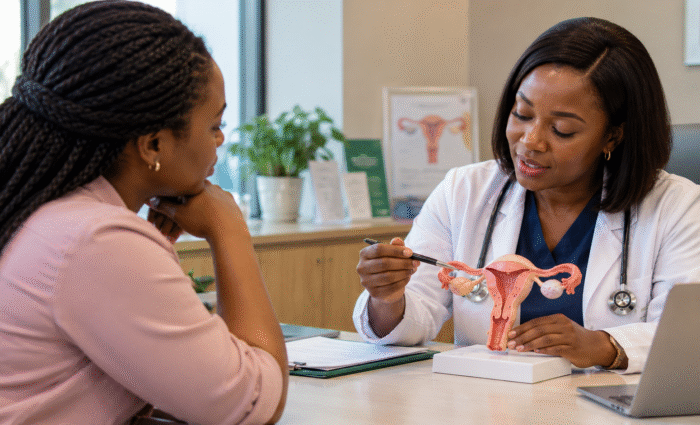

If you’re considering ovarian rejuvenation, one of your first questions may be: how long does ovarian rejuvenation take to work?
There isn’t one guaranteed timeline. With platelet-rich plasma (PRP) ovarian rejuvenation, some studies have assessed changes in ovarian reserve markers within approximately two to three months after treatment. However, responses vary considerably, and current research has not established a specific period within which ovarian rejuvenation can be expected to work.
More importantly, ovarian PRP remains an experimental fertility treatment. While some research has reported changes in markers such as anti-Müllerian hormone (AMH) and antral follicle count (AFC), stronger evidence has not consistently shown that these changes translate into higher pregnancy or live-birth rates.
Understanding that distinction is important before deciding whether the treatment is right for you.
What Is Ovarian Rejuvenation?
Ovarian rejuvenation is a term used for treatments intended to potentially improve ovarian function or ovarian response, particularly in women with diminished ovarian reserve, poor ovarian response or ovarian insufficiency.
One approach that has received increasing attention is platelet-rich plasma (PRP) ovarian rejuvenation.
PRP is prepared from a sample of the patient’s own blood. The blood is processed to concentrate platelets, which contain various growth factors. The prepared PRP is then injected into the ovaries.
The theory is that these growth factors could influence ovarian tissue and follicular activity.
That sounds promising, but there’s an important distinction between the biological theory behind PRP and evidence that it actually improves a woman’s chances of having a baby.
Research is still developing.
How Long Does Ovarian Rejuvenation Take to Work?
There is currently no medically established timeline for ovarian rejuvenation to work.
In studies of intraovarian PRP, researchers have evaluated ovarian reserve markers and fertility outcomes at different intervals. Some have assessed AMH and other changes approximately two months after treatment, while other studies have evaluated patients at around three months or over several subsequent treatment cycles.
This is why patients shouldn’t expect an immediate result after the procedure.
Depending on the individual and the treatment plan, a fertility specialist may monitor ovarian function over the following weeks or months using:
- Anti-Müllerian hormone (AMH)
- Follicle-stimulating hormone (FSH)
- Antral follicle count (AFC)
- Menstrual cycle patterns
- Response to ovarian stimulation
- Number of eggs retrieved during IVF
- Embryo development
These measurements can provide information about ovarian function, but an improvement in a laboratory marker does not automatically mean pregnancy will occur.
Why Can the Timeline Differ From One Woman to Another?
Two women receiving the same fertility treatment can have very different responses.
Several factors may influence what happens after ovarian PRP.
1. Age
Age remains one of the most important factors affecting female fertility.
As women get older, both the number and quality of available eggs generally decline. Ovarian rejuvenation should therefore not be viewed as a treatment that reverses reproductive ageing.
2. Existing Ovarian Reserve
A woman with mildly diminished ovarian reserve may have a different treatment experience from someone with severely reduced ovarian reserve or primary ovarian insufficiency.
Before considering treatment, doctors may evaluate AMH, AFC and other clinical factors to understand the patient’s ovarian reserve.
3. Previous Response to Fertility Treatment
Your response during previous IVF or ovarian stimulation cycles can provide useful information.
For example, someone who previously produced only a small number of eggs despite appropriate stimulation may be classified as a poor ovarian responder.
4. Individual Health and Fertility History
Fertility isn’t determined by a single test.
Medical history, menstrual patterns, hormonal results, reproductive history and other fertility factors can all influence treatment decisions and outcomes.
5. The PRP Protocol Used
There is currently no universally standardised protocol for ovarian PRP.
Studies differ in how PRP is prepared, platelet concentration, injection technique, timing and patient selection. This makes it difficult to give every patient the same expected treatment timeline.
What Happens After Ovarian PRP?
The exact process will depend on your fertility clinic and individual treatment plan.
Generally, follow-up may involve several stages.
Step 1: Initial Recovery
Because ovarian PRP involves injecting PRP into the ovaries, your fertility team should provide specific post-procedure instructions and explain symptoms that require medical attention.
Step 2: Monitoring Ovarian Function
Your fertility specialist may subsequently repeat tests such as:
- AMH
- FSH
- Estradiol
- Antral follicle count
The purpose is to determine whether measurable changes have occurred compared with your previous results.
Step 3: Reviewing the Results
One test result shouldn’t usually be considered in isolation.
Your fertility specialist may compare your hormonal results, ultrasound findings and previous treatment history to determine whether there has been a meaningful change.
Step 4: Planning the Next Fertility Treatment
Depending on your circumstances, the next step may involve ovarian stimulation, IVF or another fertility management strategy recommended by your specialist.
The timing should be individualised rather than based on a universal waiting period.
How Do You Know If Ovarian Rejuvenation Has Worked?
This is where expectations need to be realistic.
There isn’t one result that proves ovarian rejuvenation has “worked.”
A fertility specialist may look for changes in several areas, including:
AMH levels: AMH is commonly used as an indicator of ovarian reserve.
Antral follicle count: An ultrasound can be used to count small follicles visible in the ovaries.
FSH levels: FSH may form part of an ovarian reserve assessment.
Response to ovarian stimulation: For women undergoing IVF, doctors may examine whether the ovaries respond differently during a subsequent stimulation cycle.
Number of mature eggs retrieved: Egg retrieval results can provide additional information about ovarian response.
Ultimately, however, the outcomes that matter most to patients are usually pregnancy and live birth.
And this is where the evidence for ovarian PRP remains uncertain.
Does Ovarian Rejuvenation Increase AMH?
Some studies and meta-analyses have reported increases in AMH and antral follicle count after intraovarian PRP.
However, the findings aren’t consistent across all studies.
More importantly, an increase in AMH doesn’t necessarily mean a corresponding increase in egg quality or the probability of pregnancy.
AMH primarily provides information about the quantity of the remaining follicular pool and expected response to ovarian stimulation. It doesn’t directly measure egg quality.
This distinction matters when discussing ovarian rejuvenation with a fertility specialist.
Can Ovarian Rejuvenation Improve Egg Quality?
There is currently insufficient high-quality evidence to conclude that ovarian PRP reliably improves egg quality.
This is one of the misconceptions surrounding ovarian rejuvenation.
A change in ovarian reserve markers isn’t the same thing as creating younger eggs or reversing the biological effects of reproductive ageing.
Women considering the procedure should therefore discuss realistic expectations with a fertility specialist.
Can You Get Pregnant After Ovarian Rejuvenation?
Pregnancies have been reported after ovarian PRP treatment, including spontaneous pregnancies and pregnancies following assisted reproductive treatment.
However, this doesn’t establish that PRP caused those pregnancies.
Some observational studies have reported encouraging outcomes, but randomised controlled trials have produced less convincing results.
For example, a 2024 randomised controlled trial involving women with a history of poor ovarian response found that intraovarian PRP did not significantly improve the number of mature eggs retrieved, blastocyst production, euploid blastocyst numbers or sustained implantation compared with the control group.
More recent reviews have similarly found possible improvements in some ovarian reserve markers without consistent evidence of improved pregnancy rates.
For this reason, ovarian PRP should not be presented as a guaranteed way to become pregnant.
Who May Consider Ovarian Rejuvenation?
Ovarian PRP has been studied primarily in women experiencing fertility challenges such as:
- Diminished ovarian reserve
- Poor ovarian response
- Primary ovarian insufficiency
- Previous poor response during IVF
- Age-related decline in ovarian reserve
However, being in one of these groups doesn’t automatically mean ovarian rejuvenation is appropriate.
A complete fertility assessment should come first.
What Tests Should Be Done Before Ovarian Rejuvenation?
Your fertility specialist may recommend an ovarian reserve and fertility assessment before discussing treatment.
Depending on your circumstances, this could include:
AMH Testing
AMH can help estimate ovarian reserve and expected response to ovarian stimulation.
Antral Follicle Count
A transvaginal ultrasound may be used to assess the number of visible antral follicles.
Hormonal Tests
Tests such as FSH and estradiol may provide additional information about ovarian function.
Ultrasound Assessment
Ultrasound can help your fertility specialist assess the ovaries and other reproductive structures.
Complete Fertility Evaluation
Ovarian reserve is only one part of fertility.
Depending on the couple’s situation, evaluation may also involve assessment of the uterus and fallopian tubes, ovulation and male fertility factors such as semen analysis.
Is Ovarian Rejuvenation Proven to Work?
At present, ovarian PRP isn’t considered a proven treatment for increasing the likelihood of having a baby.
Some studies have found encouraging changes in ovarian reserve markers or ovarian response.
Others haven’t demonstrated meaningful improvements in important reproductive outcomes.
A 2026 meta-analysis of seven randomised controlled trials reported improvements in ovarian reserve-related measures including AFC, AMH and FSH but found no statistically significant improvement in pregnancy rates.
The UK’s Human Fertilisation and Embryology Authority (HFEA) currently gives intraovarian PRP a red rating for increasing the chance of having a baby in patients with diminished ovarian reserve. The authority states that reliable evidence of benefit is insufficient and notes potential safety concerns.
So, although ovarian PRP is an interesting area of fertility research, patients should understand its experimental status before making treatment decisions.
Common Myths About Ovarian Rejuvenation
Myth 1: Ovarian rejuvenation creates new eggs
Current evidence doesn’t establish that ovarian PRP creates a new supply of eggs.
Myth 2: Higher AMH means pregnancy is guaranteed
No. AMH is one component of ovarian reserve assessment and doesn’t guarantee natural conception or IVF success.
Myth 3: Ovarian rejuvenation reverses menopause
There isn’t sufficient evidence to claim that PRP can reliably reverse menopause.
Myth 4: Everyone sees results within a few weeks
There is no established timeframe in which ovarian rejuvenation must produce measurable results.
Myth 5: Ovarian PRP guarantees IVF success
It doesn’t. IVF outcomes depend on numerous factors, including age, ovarian reserve, egg and sperm factors, embryo development and reproductive health.
When Should You Speak With a Fertility Specialist?
If you’ve been told that you have a low ovarian reserve, experienced repeated poor ovarian response during IVF or are concerned about your fertility, the most useful first step is a complete fertility evaluation.
Instead of focusing only on whether ovarian rejuvenation could work, ask:
- What is causing or contributing to my fertility difficulty?
- What is my current ovarian reserve?
- What treatment options have the strongest evidence for someone in my situation?
- What are the potential benefits and risks of ovarian PRP?
- How would we measure whether treatment has produced a meaningful response?
- What alternatives are available?
At Netcare Fertility Centre, a fertility assessment can help your care team understand your reproductive health and discuss treatment options based on your individual circumstances.
How long does ovarian rejuvenation take to work?
There is no established timeframe. Some research evaluates changes in ovarian reserve markers around two to three months after ovarian PRP, but responses vary and current evidence doesn’t establish a guaranteed treatment timeline.
How soon can AMH increase after ovarian PRP?
Some studies have assessed AMH approximately two months after treatment and reported changes. However, results across studies are inconsistent, and an increase in AMH doesn’t necessarily mean pregnancy chances have increased.
How long should I wait after ovarian PRP before IVF?
There is no universal waiting period supported by strong evidence. Your fertility specialist should determine the timing of IVF based on your age, ovarian reserve, treatment history and individual response.
Can ovarian rejuvenation help low AMH?
Ovarian PRP has been investigated in women with diminished ovarian reserve, and some studies report improvements in ovarian reserve markers. However, high-quality evidence has not established that it reliably improves pregnancy or live-birth rates.
Does ovarian rejuvenation improve egg quality?
There isn’t enough reliable evidence to conclude that ovarian PRP improves egg quality or reverses age-related changes in eggs.
How many ovarian rejuvenation treatments are needed
There is no universally established number of PRP treatments. Research protocols vary, which is another reason treatment should be discussed individually with a qualified fertility specialist
Is ovarian rejuvenation permanent?
There is currently insufficient evidence to establish that any changes following ovarian PRP are permanent. Long-term effectiveness remains an area of ongoing research.
The Bottom Line
So, how long does ovarian rejuvenation take to work?
There isn’t a guaranteed answer.
Some studies monitor possible changes in ovarian reserve approximately two to three months after ovarian PRP, while others follow patients for longer periods. The response can differ significantly between individuals.
More importantly, ovarian rejuvenation with PRP remains experimental. Research has reported possible improvements in markers such as AMH and antral follicle count, but current evidence doesn’t consistently demonstrate improved pregnancy or live-birth outcomes.
If you’re concerned about low ovarian reserve or previous poor response to fertility treatment, start with a detailed fertility assessment. Understanding your ovarian reserve, reproductive history and available evidence-based treatment options will help you make a more informed decision about what comes next.
Considering fertility treatment or concerned about your ovarian reserve? Contact Netcare Fertility Centre to schedule a fertility assessment and discuss the treatment options that may be appropriate for your individual needs.